
History of Commercial Photography: A Definitive Guide
How commercial photography grew from the daguerreotype in 1839 to fashion magazines, digital cameras and today's ecommerce photos.
· 5 min read

Quick answer
Commercial photography is any photography made to sell something: a product, a service or a brand. Product photos, fashion, food, architecture and business headshots all fall under it. The history runs from the first daguerreotypes in 1839 to the white background photo on every Amazon listing today.
Environmental portraits belong in the category too, and so does the food product photography that restaurants and food brands use.
The work ranges from an international ad campaign with a crew of thirty to a single new product that needs six photos for an online store. Both are commercial photography. The difference from snapshots is the job the picture has to do: it has to make someone want to buy.
Here is how it got from a copper plate in Paris to a paper sweep in Texas.
1. The Early Days
The daguerreotype, the first practical photographic process, was announced in 1839. Each image was a one-off on a silvered copper plate, and early exposures ran to several minutes, which is why the people in them look so stiff. You can read more about the daguerreotype on Wikipedia.
Photography was commercial almost from the start. Portrait studios opened in the 1840s and did a brisk trade, since a daguerreotype cost far less than a painted portrait. But using photographs to sell other things had to wait for printing to catch up. Until the halftone process spread through newspapers and magazines, from the 1880s into the early 1900s, a photo could not be reproduced on a printed page alongside type. Advertisers used engravings instead.

2. The Rise of Fashion Photography
Cameras got smaller and simpler. In 1888 George Eastman patented the Kodak camera and sold it with the line "You press the button, we do the rest." The Eastman Kodak Company put a camera in the hands of ordinary people, which had been unthinkable a generation earlier.
Condé Nast bought Vogue in 1909. It had been a small society weekly. Under Nast it turned into a high-fashion magazine with editions on both sides of the Atlantic.
In April 1911, Edward Steichen's photographs of Paul Poiret's gowns ran in Art et Décoration. They are usually called the first modern fashion photographs, because Steichen treated the clothes as the subject rather than as something a model happened to be wearing.
By the 1930s photography had become the main medium for print advertising. Most of it was black and white. Color film arrived in the mid-1930s but stayed expensive, and color ads did not become the norm until well after the war.
Fashion is still one of the biggest fields of commercial work, from magazine editorials to the clothing product photography on every online store.
3. The Digital Era
A Kodak engineer named Steven Sasson built the first self-contained digital camera in 1975. It weighed eight pounds and recorded onto a cassette tape. Studios did not move to digital in earnest until the late 1990s and 2000s, when the files got good enough and the cameras got cheap enough.
Digital changed the day-to-day of the job more than any invention since the Kodak. You could see the shot the moment you took it, instead of waiting for film to come back from the lab. You could shoot two hundred frames of a product and throw away the ones that didn't work at no cost.
Editing software made it routine to cut a product out of its background or combine several exposures into one image. Portable strobes and battery-powered lights cut the cord to the studio, so people and products could be shot wherever they happened to be.
4. Product Photography
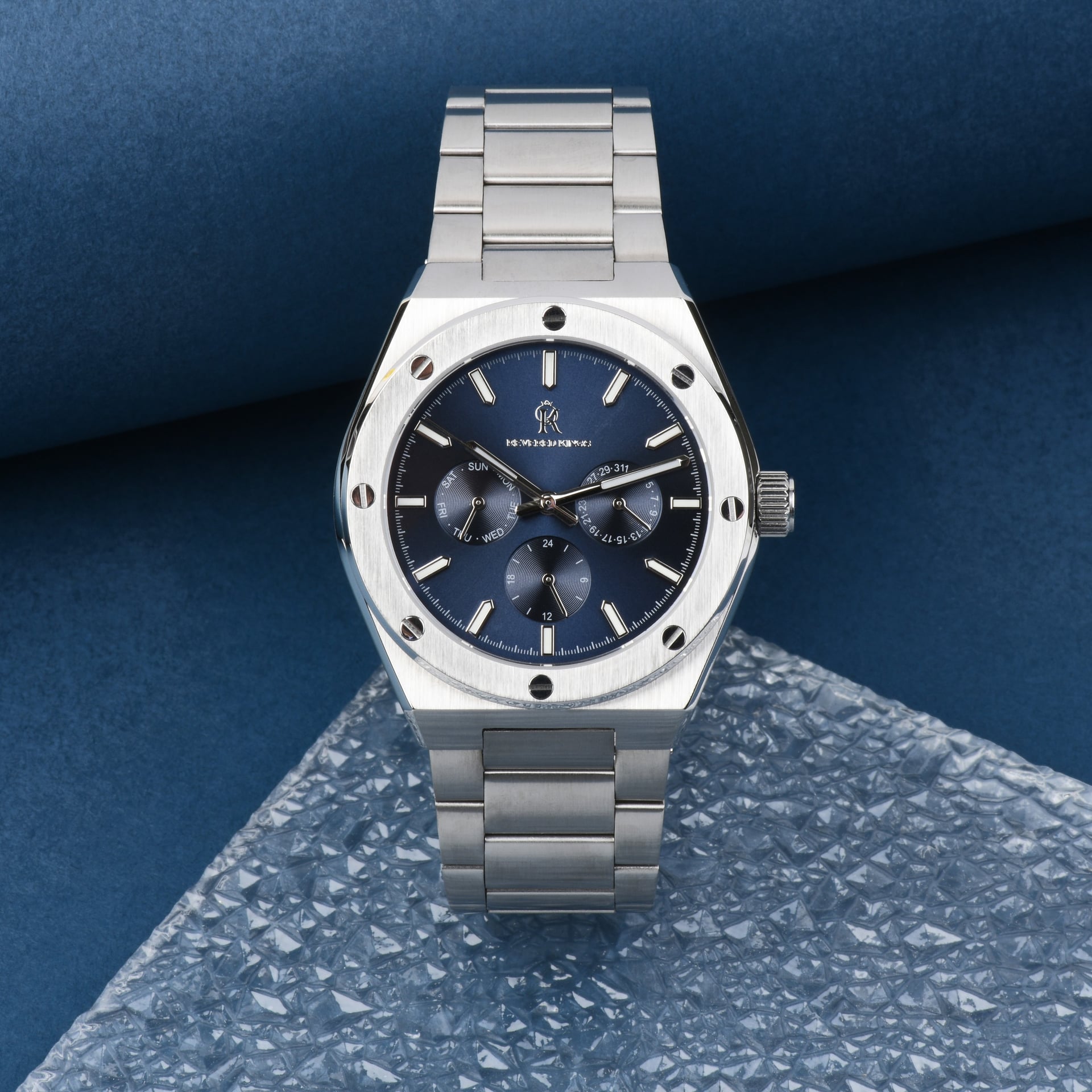
Product photography has never been more common. Better cameras and lights make it easier to get a sharp image that shows the features of a product in detail.
White background product photography is the usual choice when the product is the only thing in the frame. White makes the item stand out and gives the viewer nothing else to look at.
Ecommerce keeps pushing demand. Even the smallest retailer now sells online, and online the photo is the product until the box arrives.
Elements of Successful Advertising Product Photography
Advertising photography has one job: make the product appealing to the people who might buy it. A good photo with the right line of copy on it stays with people.
A few things that hold up regardless of the product:
Light it well. Learn how modifiers shape light so the product separates from whatever is behind it.
Keep the picture sharp and the set clean. Dust and fingerprints read as neglect.
Show the product at its best angle, which is rarely dead on from the front.
Leave room for the copy if there's going to be any.
Keep the style simple. A plain, honest picture persuades more often than a clever one.
Commercial Photography Today
Most commercial photography now is ecommerce work. Products shot on white for marketplaces like Amazon and Walmart, with lifestyle images for ads and social media.
To see what this kind of work costs, look at our product photography services and pricing or read how to budget for product photography.
Related service
Product photography price list.
Every price is per final photo, product or setup. There is no minimum order, and no fee to book or get a quote.
Frequently asked questions
What is commercial photography?
Photography made to sell a product, service or brand. Product, fashion, food, architecture and business headshots all count.
When did commercial photography start?
Soon after photography itself. The daguerreotype came out in 1839 and portrait studios opened within a few years. Photos only spread through magazines and ads once halftone printing improved around the turn of the century.
Who took the first fashion photographs?
Edward Steichen's 1911 photos of Paul Poiret's gowns in Art et Décoration are usually called the first modern fashion photographs.
When did photos replace drawings in ads?
By the 1930s, photography had become the main medium for print advertising.

Sam Werkmeister
Sam Werkmeister, founder and CEO of ProductPhoto, has over two decades of experience in product photography.


